What is the Subway "Bain" (And Why Can't You Overfill It?)
When you walk into a Subway and look down at that colorful spread of meats, cheeses, and vegetables, you’re staring at a piece of equipment that has a specific name in the restaurant industry: the Bain-Marie, or just “the Bain” for short. Keeping it stocked is the core of a Sandwich Artist’s job. But there’s one strict health-code rule that new hires violate constantly, and it’s the rule that health inspectors check first when they walk through the door: the Fill Line Rule. I’ve watched franchise owners get cited over this during surprise inspections, and the violation is almost always because someone tried to save time by piling food too high. Here’s exactly how the Bain works, why the fill line exists, and how to manage it properly during a rush.
How the Bain-Marie Actually Cools Food
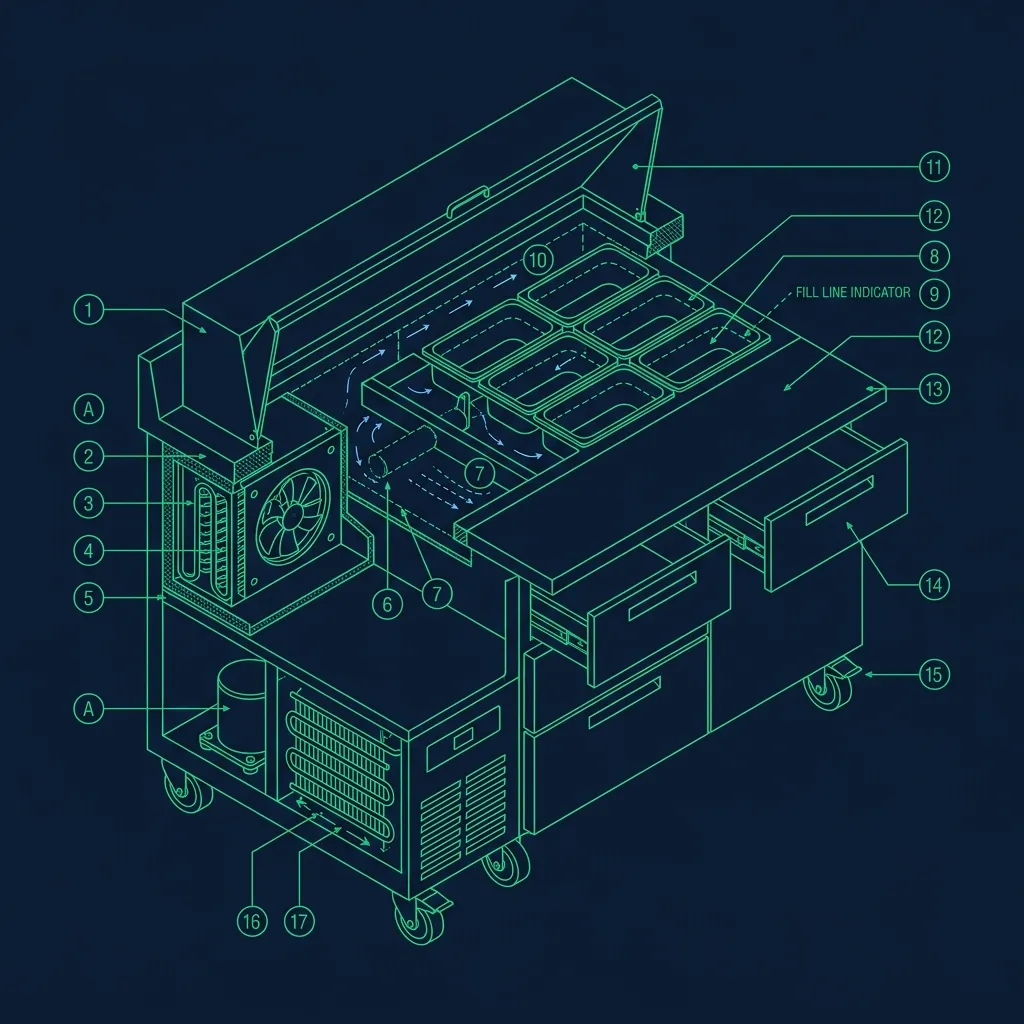
Unlike a standard refrigerator that surrounds food with cold walls and a sealed door, the Subway Bain is an open-air cooler. The pans sit exposed to the restaurant so customers can see (and point at) exactly what they want on their sandwich. So how does it keep food cold without a door?
Russell’s Note: When your KDS screen is going red on a Friday night, the last thing you want is a broken line. You have to run a 120-second window or you’re dead in the water.
Russell’s Note: Time to lean, time to clean. It’s an annoying cliché, but when the health inspector (the ultimate clipboard warrior) shows up unannounced, you’ll be glad you wiped down the low-boys.
The Bain uses a forced-air refrigeration system that constantly blows a blanket of freezing cold air horizontally across the top of the metal ingredient pans. Carefully positioned vents along the back edge of the Bain push refrigerated air forward, across the surface of every pan, and a return vent at the front draws the air back in to be recooled. This creates a continuous loop of cold air flowing over the food.
The target temperature at the food surface is 41°F (5°C) or below. The unit itself typically blows air at an even lower temperature—around 34°F to 36°F—to compensate for the fact that an open-air system is inherently less efficient than a sealed refrigerator. Heat from the restaurant, customers leaning over the glass, and the constant opening and closing of pans all work against the system. It’s an engineering compromise that works well—but only if you follow the rules.
The Fill Line Rule: Why Overfilling Is Dangerous
During a heavy lunch rush, it’s tempting to grab a massive bag of shredded lettuce and pile it into a mountain inside the Cambro pan so you don’t have to restock for an hour. I get the impulse. You’re slammed, you’re making sandwiches as fast as you can, and stopping to swap pans feels like a luxury you can’t afford.
But overfilling is a serious food safety violation. Every single pan in the Bain has a physical fill line etched into the plastic. That line isn’t arbitrary—it marks the maximum height at which the forced-air cooling system can keep the food at safe temperatures. If you pile turkey or lettuce above that line, the food at the top of the mountain protrudes through the invisible blanket of cold air and sits at room temperature.
Here’s what happens next: within an hour, the top layer of turkey starts sweating. The cheese gets greasy and warm. The lettuce wilts and goes limp. If a health inspector walks in with a probe thermometer and temps the top of that meat mountain, the reading will come back above 41°F and the store gets an immediate citation. I’ve seen it happen on a routine inspection during a Tuesday lunch rush—the inspector walked in, stuck a thermometer into the turkey pan, got a 47°F reading, and the store had to dump the entire pan and refill from the walk-in cooler while customers watched.
Temperature Logging: The Paper Trail That Saves You
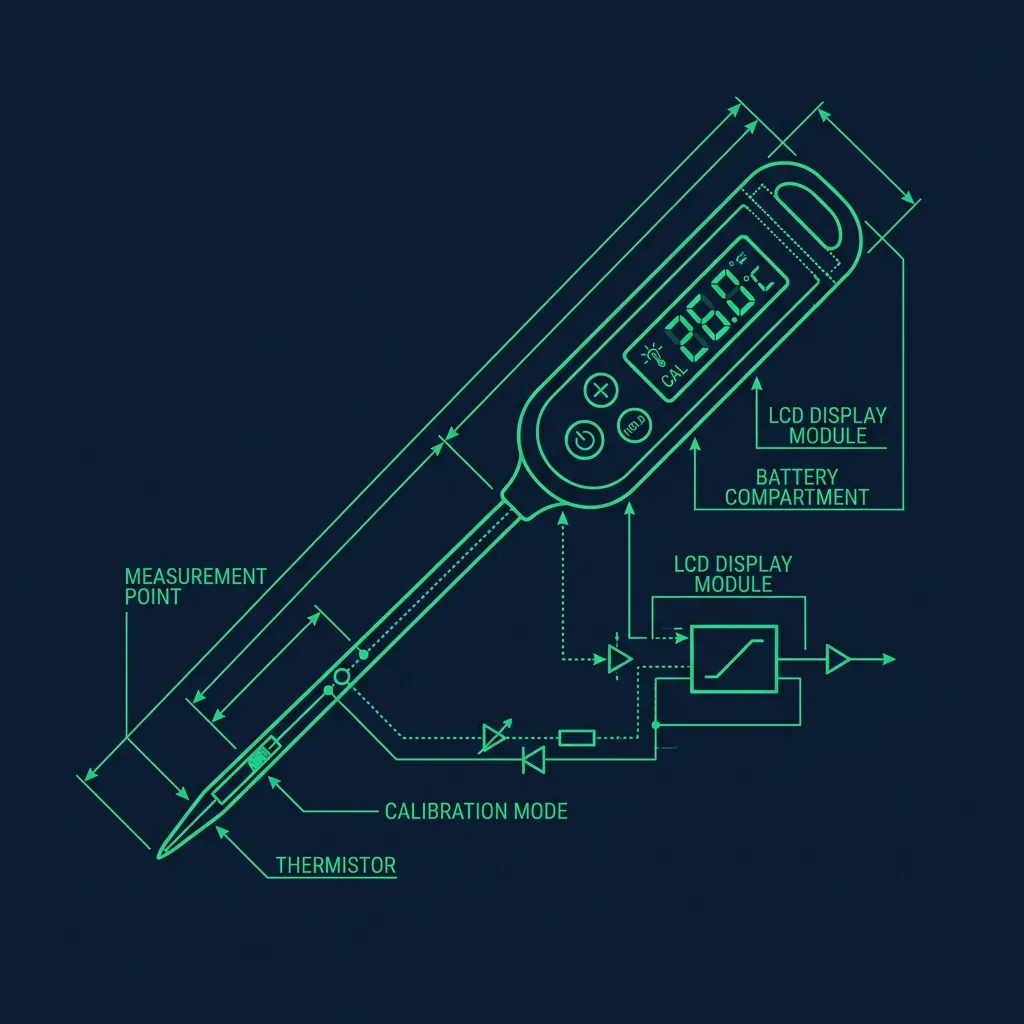
Eyeballing the fill line isn’t enough. Most Subway locations are required to log the temperature of the Bain at set intervals throughout the day—typically every four hours. The Shift Lead or a designated Sandwich Artist uses a calibrated probe thermometer to check the surface temperature of several pans, and the readings go onto a clipboard or into a digital system.
These temperature logs are the first thing a health inspector asks to see during an inspection. Gaps in the log or missing entries can result in a citation even if the food temperatures are currently fine, because the inspector has no proof the food was safe during the hours that were skipped. I’ve managed locations where the morning opener forgot to do the first temp log, and even though everything was fine by afternoon, the missing entry generated a written warning during the inspection.
The logs also serve as an early warning system. If you notice a reading of 39°F one cycle and 40°F the next, the trend tells you the Bain’s refrigeration is struggling. Catching that early gives you time to call for maintenance before the unit fails entirely during a lunch rush.
The Backup Pan System: Swap, Don’t Top Off
A good Sandwich Artist never overfills the Bain. Instead, they keep backup pans prepped and stored in the reach-in cooler directly below the Bain, ready for rapid swaps.
Here’s the proper workflow: before the lunch rush, the opener or mid-shift worker preps a full set of backup pans—sliced tomatoes, shredded lettuce, green peppers, onions, all the meats—and stores them in the under-counter cooler. When a pan on the line runs low, you pull the nearly empty pan out, slide the fresh backup pan in, and then refill the old pan during a lull.
The critical principle here is swap, not top off. Dumping fresh lettuce on top of lettuce that’s been sitting on the line for three hours creates a layering problem where the older product on the bottom never gets used and eventually spoils underneath the fresh layer. This is the same First In, First Out (FIFO) principle used in every professional kitchen, from Subway to fine dining. If you’re topping off instead of swapping, you’re hiding old food under new food, and that’s exactly the kind of practice that creates foodborne illness incidents.
During a heavy lunch rush, expect to swap high-volume pans—lettuce, tomatoes, turkey—every 30 to 45 minutes. Low-volume items like banana peppers or jalapeños might only need a swap once during the entire rush.
Common Mistakes New Hires Make
Beyond overfilling, several other Bain-related errors trip up new Sandwich Artists:
- Leaving lids open during slow periods. When the store is quiet and no customers are at the line, keep the sneeze guard lids closed. Every second the pans are exposed to open restaurant air, the forced-air system works harder to maintain temperature. It’s like running your home AC with the windows open.
- Stacking pans incorrectly. The Bain slots are designed for specific pan sizes. Forcing a deep pan into a shallow slot lifts the food higher than the fill line by default, defeating the purpose of the line entirely.
- Ignoring condensation. If you see water droplets forming on the inside of the sneeze guard or pooling around the pans, the Bain’s refrigeration system may be struggling. Report it to the manager immediately rather than wiping it away and hoping for the best. Condensation is a symptom, not the problem.
- Putting warm food directly into the Bain. Never. All food placed into the Bain must already be at refrigerator temperature (41°F or below). Placing warm food raises the temperature of everything around it and overwhelms the forced-air system. Always cool food in the walk-in first, just like you’d cool bread after baking before handling it.
Pro Tips for Bain Management
- Prep small, prep often. Instead of prepping one massive batch of sliced tomatoes for the entire day, prep two or three smaller batches. Smaller batches stay colder longer in the backup cooler and are easier to swap into the Bain without overfilling.
- Use the two-finger test. If you can press two fingers between the top of the food and the rim of the pan, you’re safely below the fill line. If your fingers touch food immediately, the pan is overfilled. It’s a fast visual check during a busy rush when you don’t have time to look for the etched line.
- Clean the vents weekly. The forced-air vents along the back of the Bain accumulate dust and food debris over time, reducing airflow. A quick wipe-down with a sanitizer towel during closing keeps the system running efficiently and prevents the slow temperature creep that leads to failed inspections.
Frequently Asked Questions
What temperature should the Bain maintain at the food surface?
The target is 41°F (5°C) or below at the food surface. The Bain’s forced-air system typically blows air at 34°F to 36°F to compensate for the open-air design’s inefficiency. If surface temps consistently read above 38°F, have the unit inspected by a technician—something is likely restricting airflow or the compressor is struggling.
How often should I restock the Bain during a lunch rush?
During a heavy rush, expect to swap pans every 30 to 45 minutes for high-volume items like lettuce, tomatoes, and turkey. Low-volume items like banana peppers or jalapeños may only need one swap during the entire rush. The key is to watch the levels and swap before you run empty, not after—an empty pan means a customer is standing there waiting while you manage the line flow.
What happens if the Bain’s refrigeration system breaks during a shift?
Every perishable item must come off the line immediately and go into the walk-in cooler. The store may need to close the sandwich line entirely until the unit is repaired. Serving food from a non-functioning Bain is a serious health code violation that can result in the store being shut down by the health department. There’s no workaround for this one—if the Bain is down, the line is down.