What is the Starbucks Customer Support (CS) Cycle?
During a busy morning at Starbucks, you might notice one barista who isn’t making drinks and isn’t taking orders. They’re sprinting around the store—dumping ice into bins, hauling milk from the back room, wiping down the condiment bar, and checking trash cans. They look like they’re doing random chores. They’re not. That barista is running the Customer Support role, and if they stop moving, the entire store collapses within minutes. I’ve seen it happen. Here’s exactly how the CS Cycle works and why experienced Shift Supervisors will fight to protect it.
The Timed Cadence: 8, 10, or 15 Minutes
The CS role is not a free-for-all list of tasks you knock out whenever you feel like it. It’s a highly structured routine governed by a literal timer. The barista clips a digital timer to their apron and sets it—usually to 8 or 10 minutes during peak, or 15 to 30 minutes during slower periods.
Russell’s Note: When your KDS screen is going red on a Friday night, the last thing you want is a broken line. You have to run a 120-second window or you’re dead in the water.
Russell’s Note: You don’t know true panic until a 15-item catering order drops right in the middle of a Sunday brunch shift. I still have nightmares about it.
Every time that timer beeps, the CS barista drops whatever they’re doing, resets the timer, and starts the cycle from the top. No exceptions. No “let me just finish this one thing.” The timer beeps, you reset and go.
The cadence length is set by the Shift Supervisor based on current store conditions. During a morning peak—typically 6:00 AM to 9:00 AM—the timer runs at 8 or 10 minutes because supplies are being consumed at a ferocious pace. The Hot Bar barista is burning through milk, cups, and espresso beans constantly, and if you fall behind by even one cycle, they start running out of things. During a quiet Tuesday afternoon, the cadence might stretch to 15 or even 30 minutes because consumption slows to a crawl.
The Four Steps of Every CS Cycle

Each cycle follows the same four steps, in the same order, every single time:
Step 1: Brew Coffee
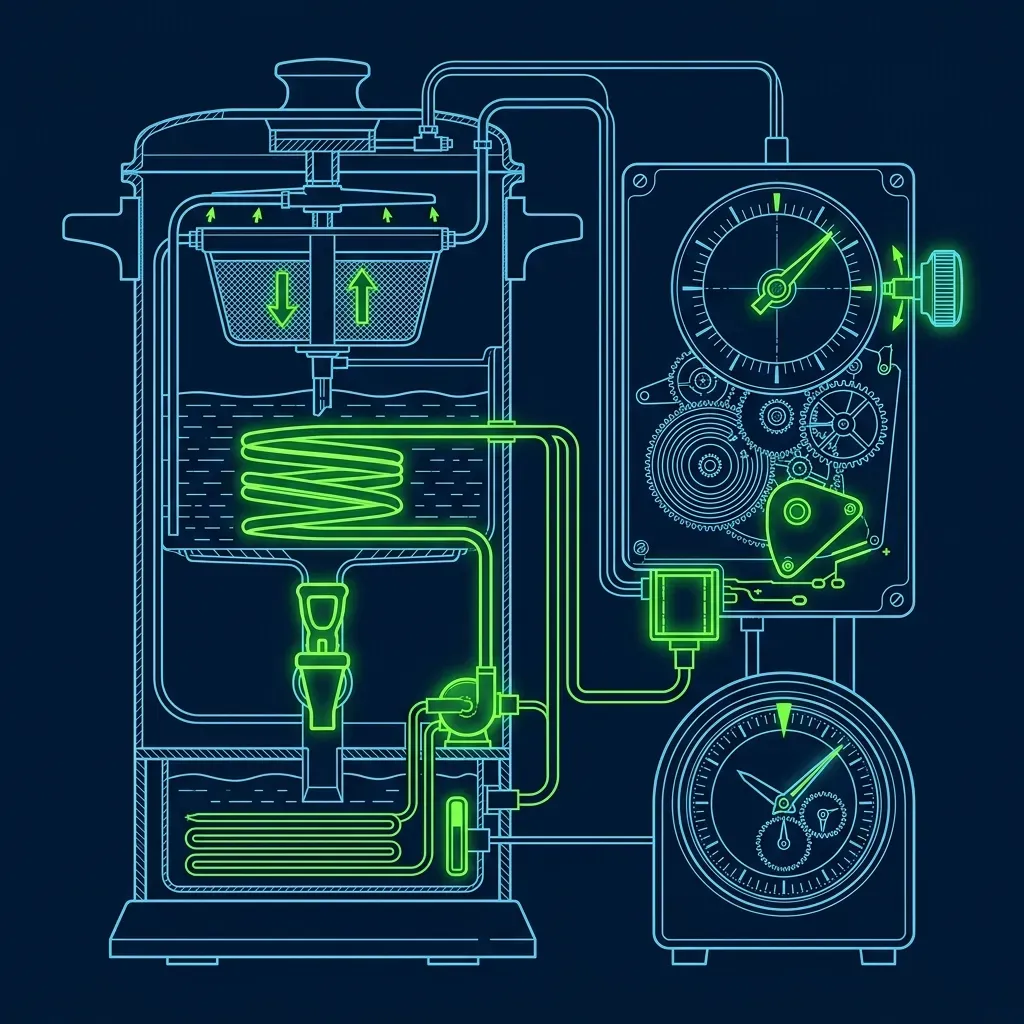
The very first priority is always drip coffee. Check the timers on the urns. If any batch has been sitting longer than 30 minutes, dump it, rinse the urn, and brew a fresh batch of Pike Place, Blonde, or Dark Roast. Drip coffee has a strict 30-minute freshness window. Coffee that sits beyond that tastes stale and flat, and regular customers who order the same Pike Place every morning will absolutely notice the difference and say something.
Here’s what I’ve seen trip up new CS baristas: they look at the urn, see that it’s still three-quarters full, and skip the brew step. But the urn being full doesn’t mean the coffee is fresh. If the timer says 35 minutes, that coffee is dead. Dump it. Always check the timer, not the level.
Step 2: Restock the Bars
This is the multiplier step—the one that makes or breaks the entire store’s performance. Walk to the Hot Bar and Cold Bar. Check their milk supply, cup supply, lid supply, syrup levels, and ice bins. Whatever is running low, sprint to the back room and bring it forward.
The goal is simple: the baristas making drinks should never have to leave their stations. A Hot Bar barista who has to stop mid-latte to walk to the back room for more oat milk loses 30 to 60 seconds. Multiply that by every missing supply item, and the entire drink queue backs up within minutes.
Experienced CS baristas don’t just check what’s empty—they anticipate what’s about to run out. If the 2% milk is half full but the oat milk is almost gone, grab the oat milk first. A bar partner running out of oat milk creates a longer delay because they have to ask the customer about substitutes. The 2% can wait another cycle.
During summer, ice is the number one priority. The Cold Bar can blow through an entire ice bin in under 20 minutes during peak Frappuccino hours. During winter mornings, drip coffee and whole milk dominate because hot lattes and brewed coffee are the top sellers.
Step 3: The Cafe Check (Lobby Sweep)
Walk into the customer area. Wipe down the condiment bar. Empty the trash cans if they’re over three-quarters full. Make sure the milk and sugar station is stocked. Check the bathrooms for toilet paper and paper towels. This step takes about 60 to 90 seconds if you move fast, and it makes a massive difference in how the store looks and feels to customers who are sitting in the cafe.
Step 4: The Flex Task
If Steps 1 through 3 are complete and the timer hasn’t beeped yet, check the Operations Station board for a flex task. This might be washing a load of dishes, sweeping the back room, prepping a backup batch of mocha sauce, or restocking the pastry case with thawed items from the Pull to Thaw.
The flex period is your chance to build a buffer for future cycles. If you spend it prepping backup sauces or pre-stocking extra cups, the next several cycles run smoother. If you waste it standing around, you’ll eventually hit a cycle where everything runs out simultaneously and you can’t keep up.
When the timer beeps, you drop the flex task, reset, and go back to Step 1.
Why Shift Supervisors Protect the CS Role
Here’s the reality that new partners don’t understand until they’ve seen it play out: the CS barista looks like they’re doing grunt work, but they have an enormous multiplier effect on the entire store. When the CS cycle runs well, bar partners never stop moving. They never run out of cups, milk, ice, or syrup. They never have to pause mid-drink to brew coffee or wash a blender pitcher.
The moment the CS barista falls behind—maybe they get pulled to help take orders, or they skip a restock step—bar partners start running dry. One missing supply creates 30 seconds of delay. Three missing supplies and the drink queue spirals out of control within minutes.
This is why experienced Shift Supervisors protect the CS role fiercely. When the front register gets slammed and someone suggests pulling the CS barista to help take orders, a good SSV will almost always say no. The short-term relief of an extra register partner is not worth the long-term damage of a disrupted CS cycle. I’ve managed stores where we tried it during a particularly brutal morning rush, and within 15 minutes the bar partners were completely dry on milk, cups, and mocha sauce. It took another 20 minutes to recover. Never again.
Restocking Prioritization by Season
Not all restock tasks are equally urgent, and the priority shifts dramatically depending on the time of year and time of day:
- Summer afternoons: Ice, ice, ice. Cold cups. Frap Roast. Refresher bases. The Cold Bar is running at maximum capacity.
- Winter mornings: Drip coffee. Whole milk. 2% milk. Hot cups. Espresso beans. The Hot Bar is the bottleneck.
- Year-round: Oat milk is almost always the first alternative milk to run out, regardless of season. Keep an extra carton staged near the bar at all times.
Frequently Asked Questions
Is the CS role harder than working the bar?
It’s a different kind of hard. Bar positions require recipe memorization and drink-making speed. The CS role requires constant physical movement, aggressive multitasking, and the mental discipline to follow the timed cycle without getting distracted. Many baristas say CS is more physically tiring because you’re on your feet and moving for the entire shift, while bar positions involve more standing in one spot.
What happens if you can’t finish all four steps before the timer goes off?
Reset the timer and start back at Step 1 anyway. The cycle is designed so that the highest-priority tasks—brewing coffee and restocking—always get done, even if the lobby check or flex task occasionally gets skipped. Consistently failing to complete the full cycle usually means the cadence is set too short for the current volume, or the store is understaffed.
Do all Starbucks locations use the CS Cycle?
Yes. The Customer Support Cycle is part of Starbucks’ company-wide Playbook operational system. Every corporate-owned store follows it. Licensed stores inside grocery stores, airports, and similar locations may run a modified version depending on their staffing agreement, but the core concept of a timed, structured support role is consistent across the entire brand.