Wendy's Chili Is Made From Leftover Hamburgers
If you’ve ever eaten Wendy’s chili, you’ve probably heard the rumor: “They make it out of old, leftover hamburgers.” If you’re a new hire at Wendy’s, you’ll learn on your very first shift that this internet rumor is 100% true. But before you recoil in horror, let me tell you something from a decade of kitchen management—this is not a dirty secret. It’s not a health code violation. It’s actually one of the smartest pieces of kitchen efficiency in the entire fast food industry, and the food safety protocols behind it are more rigorous than most people realize.
The “Burned” Meat Rule
Wendy’s entire brand promise is fresh, never-frozen beef. Because the beef is fresh, it has a very short window of usability once it hits the grill. If a hamburger patty sits on the [What is the Wendy’s Double-Sided ](/articles/wendys-clamshell-grill/))*
Russell’s Note: Forget the fancy gadgets. Give me a sharp 8-inch chef’s knife and a 32oz deli container labeled with blue painter’s tape, and I can run any station.
Russell’s Note: Forget the fancy gadgets. Give me a sharp 8-inch chef’s knife and a 32oz deli container labeled with blue painter’s tape, and I can run any station.
But throwing away perfectly good, cooked beef is a massive waste of money. A single busy Wendy’s can accumulate several pounds of overcooked patties per shift. Multiply that by three shifts a day, seven days a week, and you’re looking at a staggering amount of protein heading straight to the dumpster.
So Wendy’s repurposes it. And the key word here is “repurposes,” not “reuses.” The meat doesn’t get scraped off the grill and dumped directly into a pot. It goes through a completely separate, multi-step preparation process with strict food safety controls at every stage.
The Chili Meat Process: Step by Step
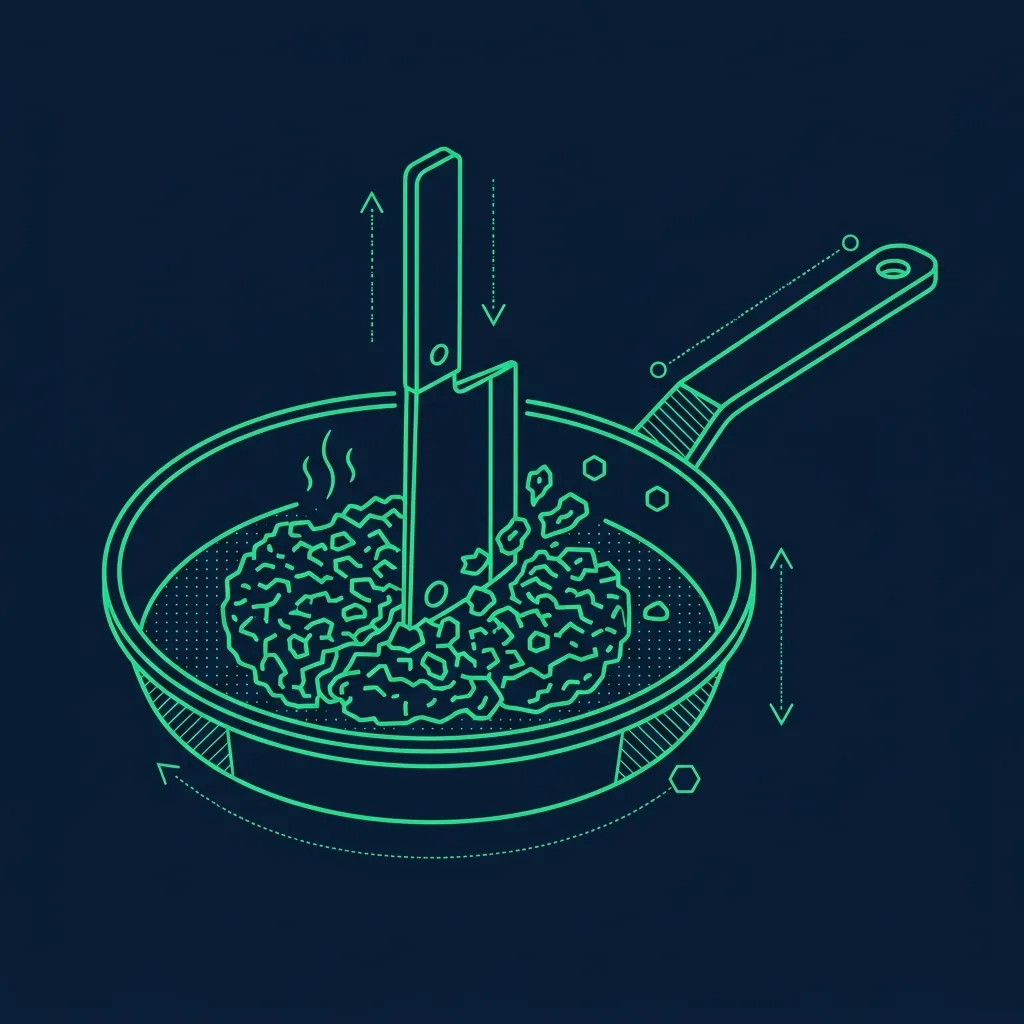
Here’s exactly how it works, from the grill to the chili pot:
-
The Chop: The overcooked patties are pulled off the grill and placed into a designated metal pan. A cook takes a heavy metal chopping tool—essentially a flat-edged metal blade—and breaks the square patties down into small, bite-sized crumbles. The target crumble size is about the size of a pea. I’ve watched new hires leave chunks the size of golf balls and wonder why the chili looked wrong. Uniform, small crumbles ensure every ladle has the same consistency and that the meat reheats evenly.
-
The Freeze: The crumbled meat is immediately transferred into food-safe bags, clearly dated with a marker, and placed into the freezer. This rapid temperature drop is critical for food safety—it brings the meat through the bacterial danger zone (41°F to 135°F) as quickly as possible and holds it safely until it’s needed.
-
The Boil: When it’s time to make a fresh batch of chili, the frozen meat crumbles are pulled from the freezer and placed into a massive pot of boiling water. This second cooking step serves two purposes: it ensures the meat is thoroughly re-cooked to a safe temperature, and it extracts much of the residual grease from the original grill cooking. The water comes out cloudy and greasy—that’s working as intended.
-
The Mix: The boiled meat is drained and combined with the official Wendy’s chili base, which arrives at the store in large bags containing beans, tomato sauce, diced onions, celery, and the proprietary chili spice blend. The cook mixes everything together in the chili pot.
-
The Simmer: The entire mixture simmers in the chili warmer for several hours before it’s served to customers. This long simmer time allows the flavors to meld and produces the deep, rich consistency that makes Wendy’s chili so distinctive.
Why the Chili Tastes So Good
Here’s the part that most people don’t understand: the leftover burger process is precisely why Wendy’s chili tastes as good as it does. Those patties were seared on a high-heat grill at over 400°F, developing a heavy Maillard crust—the exact same browning reaction that gives a perfect steak at a high-end restaurant its flavor. Those crispy, charred bits of beef carry an enormous amount of concentrated grilled flavor.
When those charred crumbles are simmered in the chili base for hours, they release all that smoky, caramelized depth into the liquid. If Wendy’s used plain, boiled ground beef straight from the package, the chili would taste flat and bland. The grill char is the secret ingredient. It’s the same reason a high-end restaurant uses leftover steak trimmings in their staff meal stew rather than throwing them away. It’s not cutting corners—it’s adding flavor you literally can’t get any other way.
Holding, Rotation, and Daily Production
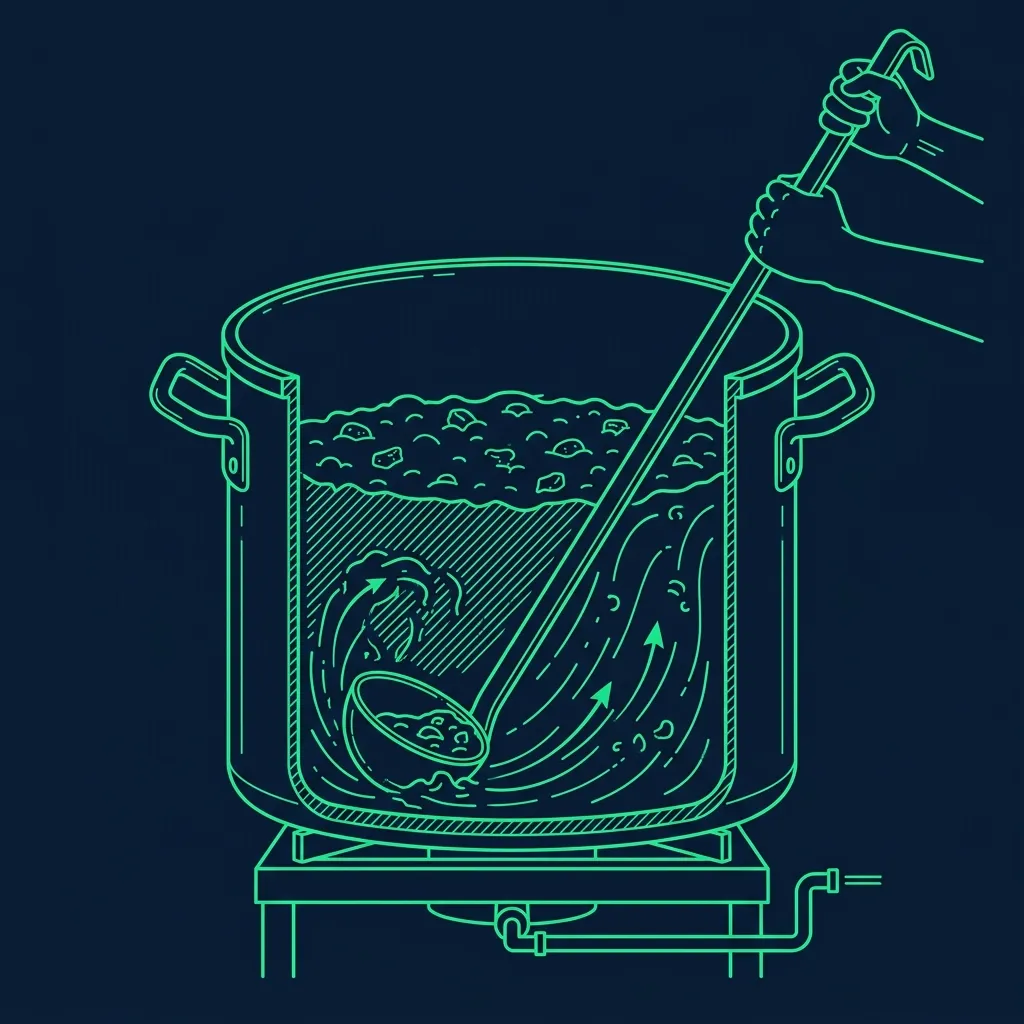
Once the chili is simmering in the warmer, it is absolutely not a set-it-and-forget-it situation. The chili must be stirred from the bottom at least every 30 minutes. If it sits undisturbed, the beans and meat settle while the liquid rises, creating an uneven product where one customer gets watery broth and the next gets a thick, chunky ladle.
Wendy’s follows a strict rotation schedule. A batch has a maximum hold time of four to six hours at proper holding temperature (above 140°F). Temperature logs are maintained throughout the day, and a probe thermometer is used to verify internal temp periodically. If a batch approaches the end of its hold time and hasn’t been sold, it gets discarded.
A typical Wendy’s makes one to three batches per day. The morning crew preps the first batch during opening so it’s ready for the lunch rush. Additional batches are made as needed throughout the afternoon and evening. On days when the grill is exceptionally busy with very little patty waste, there may not be enough leftover meat for a full batch—in those cases, the store can use fresh ground beef specifically for the chili, though this is less common and less cost-effective.
The FIFO Rule and Common Mistakes
Every bag of chopped chili meat in the freezer must have a clear date on it. Old bags get used first—FIFO (First In, First Out). I cannot tell you how many times I’ve found undated bags shoved to the back of a walk-in freezer. If you find an undated bag, show it to your manager. Do not guess when it was prepped and toss it into the pot. Undated product is a food safety liability that can get your store shut down during an inspection.
The other common mistake is not stirring from the bottom. New hires will give the chili a surface stir and call it done. The beans and thick chili base stick to the bottom of the pot and scorch, creating a burnt flavor that taints the entire batch. A proper bottom-to-top stir with a long ladle, scraping the bottom on every pass, prevents this entirely.
Frequently Asked Questions
Is it safe to eat chili made from leftover burgers?
Absolutely. The meat goes through multiple safety stages: it’s cooked on the grill, chopped, frozen to a safe temperature, boiled again in water, and then simmered in the chili pot for hours. Each step kills potential bacteria and ensures the final product exceeds food safety standards. Health inspectors are fully aware of this process—it’s documented, compliant with all food codes, and inspected regularly. This is standard culinary practice, not a shortcut.
Why does the chili sometimes taste different from visit to visit?
Small variations are completely normal and expected. The ratio of heavily charred patties to lightly cooked ones changes from day to day. A batch made with deeply seared, well-crusted patties will have a smokier, richer flavor than one made with patties that were only slightly overcooked. The simmer time also matters—a batch that’s been going for four hours will taste more concentrated and developed than one that just started. This natural variation is actually part of the charm.
Is the chili made fresh every day?
Yes. Wendy’s makes fresh batches daily. The chili base is mixed with freshly boiled meat crumbles each time a new batch is assembled. Leftover chili from the previous day is not carried over, reheated, or served the next morning. When the closing duties checklist is complete, any remaining chili is discarded.
Related Guides: Learn the 4-Corner Press technique that determines which patties end up as burgers vs. chili meat, and see how the Wendy’s clamshell grill cooks those patties in the first place.